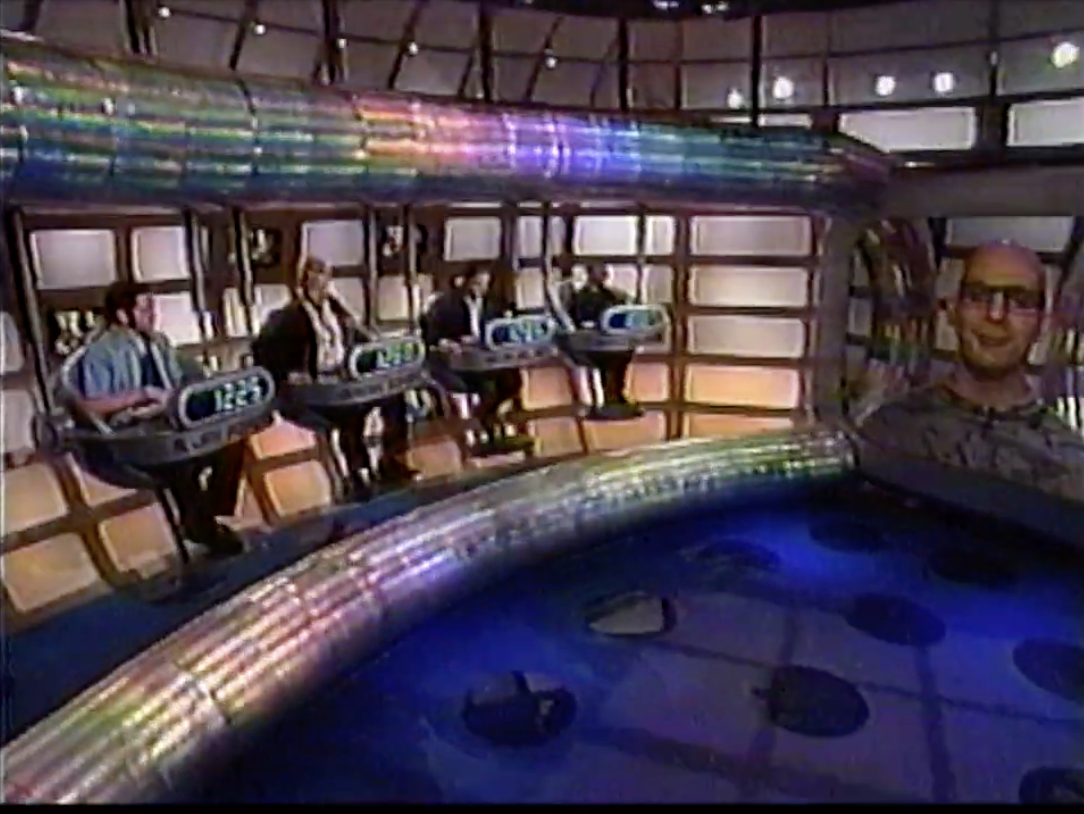
One of my most indelible memories is walking out of MTV’s headquarters at 1515 Broadway at 4am on an early autumn morning in 1999. We had just tested the first game show intentionally designed for home computer play-along: webRIOT. The team had put the software through its paces in lab environments, but this was the first night we ran it in full production, in the wee hours when few might be watching. It worked. Flawlessly. We were flying high and I went to celebrate with my colleagues at the only place open, the Times Square McDonald’s.
webRIOT was an audacious idea, born of the swagger one expected from MTV in those days. It was one of many groundbreaking moments during my stint as Executive Producer of Convergence working across the MTV Networks properties, but certainly the biggest and most experimental. Triggers baked into the TV signal let a computer running our downloadable software (long before “app” was a household word) sync to the show. Home players answered questions in real time. Live data feeds sent the highest scores to the MTV head-end, where they were inserted as chyrons after commercial breaks. Prizes were awarded every day. The show broke ground in every way we could think of.
Visually, it was stunning. Host Ahmet Zappa appeared Max Headroom-style on a giant studio monitor looming over a futuristic set. The art design blended futurism with touches of analog signal decay, including faux glitches that must have looked great to viewers. To us, they were constant reminders of what real failure would look like.
Swagger was part of the engineering. We debuted the show earlier that year to the Television Critics Association press tour at the Ritz-Carlton in Pasadena. With no live TV signal available, we built a local network to power 50 rented laptops “watching” a video feed. We had less than a day to set up and test. Anything short of perfection would have been a disastrous black eye in front of the most influential media voices in the country. The adrenaline of a no-fail situation carried us. It was a historic day, though mostly for another reason: one of the other new shows rolled out for the critics was a little cartoon about a talking sponge.
From the MTV executives who had the guts to concept and greenlight webRIOT to everyone who spent a year inventing it alongside software developer Spiderdance (whom I would join the following year), it’s a moment I’ll never forget.
The show ran only two seasons, but it set the stage for behaviors that became commonplace. We thought we were building an age of interactive TV. Looking back, we were inventing two-screening, though none of us had the word for it then. Eight years later, the iPhone cemented that behavior, and the phrase, into daily life.
It’s a lesson I’ve carried since. New behavior shows up years before anyone has a name for it, and the only way to learn it is to run the experiment under real conditions, at 4am if you have to. Today’s AI-driven world is no different. The stakes are higher and the glitches are harder to see, but the instinct is the same: find the behavior early, test it live, and don’t wait for the vocabulary to catch up. That’s the part I enjoy. By the time it becomes the norm, I am already on to the next evolution. Or, if I am lucky, revolution.
Down the rabbit hole: An episode of webRIOT is available on YouTube.